Welcome
This post will cover the majority of the novel, especially the chapters 16-20. I will also discuss my character, Jem, our class discussions as well as three other articles relating to the novel.

Final Impressions
This reading of To Kill a Mockingbird, was my second reading if the novel. While I thoroughly enjoyed it both times, this time was unique. In class we applied more literary analysis techniques and dug much deeper into the text. This novel stands as one of my top five historical fictions novels that I have read. The story that Harper Lee crafts is impactful, intense, and yet manages to relate to the reader in ways that cannot be imagined. I found myself enveloped in a world from the past, one that I was emotionally invested in. The relatability of this novel easily puts it in my top five spots.
The Secret Lives We Live.
Before reading, we began with a statement, “The Secret Lives We Live.” As we read the novel we were asked to keep this in the backs of our minds. As I read, I realized how critical this statement was to understanding the novel. The perspective that Scout, a young child, lends to the novel ties the above statement to the novel. Scout is able to flit in and out of the secret lives that the adults hold in the novel. From Mrs. Dubose and her Morphine addiction to Boo Radley with his hermetic demeanor, we are introduced to secret lives through the eyes of Scout.
This allows the reader to empathize with people from a child’s objectivity.
To exemplify this we look no further than the reading sessions with Mrs. Dubose. These session are the punishment for an outburst of Jem’s rage. Through these sessions Scout and Jem begin to understand that much of Mrs. Dubose’s temper comes from sickness. Any adult may view her as just an old morphine addict, but through the perspective of scout we see under a new light.
“You never really understand a person until you consider things from his point of view until you climb into his skin and walk around in it.” – Atticus Finch
The above rule becomes a maxim that directs Scout through many of her actions in the novel. This quote highlights our inability as humans to empathize with each other. Often we don’t want to make the effort of feeling with someone else. Preventing us from understanding and seeing eye to eye with others. This ties into the article “Self-Segregation: Why It’s So Hard for White People to Understand Ferguson,” but I’ll come back to that later.
Jem Finch
The character that I was assigned was Jem. Jem is Scout’s older brother and provide lots of support and guidance for Scout. In the first part of the book Jem seems to be a somewhat basic character, and I wasn’t very impressed with him. He was the classic, caring older brother to Scout. In a way he was infallible to Scouts eyes, she looked up to him immensely. However, after Jem’s interaction with Mrs. Dubose and his earth shattering experience with the trial we see a character who is strong, yet vulnerable. His strength is exhibited in every action of mentorship Jem preforms for Scout. One event that shows Jem’s vulnerability is his gift from Mrs. Dubose, after her death. It is a camellia, the very flower he destroyed, we see hints of remorse as he takes and fingers the petals.
With my empathy map I captured some of Jem’s defining moments through the novel. These maps helped me keep track of Jem and his doings. Mapping a character allows for the reader to empathize with the character and understand them further.
Quotation Analysis
“It’s like bein’ a caterpillar in a cocoon, that’s what it is,” he said. “Like somethin’ asleep wrapped up in a warm place. I always thought Maycomb folks were the best folks in the world, least that’s what they seemed like.”
This quote is another example of Jem’s innocence. It comes from a conversation between Jem, Ms. Maudie, and Scout. Jem uses a metaphor to explain the devastation that he is facing after the trial comes to a close. In this usage the caterpillar represents innocence or ignorance, whichever you prefer. Maycomb is Jem’s cocoon, his safety and innocence.
Moments like this provide turning points for characters like Jem. The simple metaphor speaks volumes for Jem and his views of Maycomb. However to me Jem’s “innocence” is really naivety. These events seem to shake Jem’s faith in law and justice. As the novel continues we don’t really see if he will recover or not.
“That’s what I thought, too, ” he said at last, “when I was your age. If there’s just one kind of folks, why can’t they get along with each other? Scout, I think I’m beginning to understand something. I think I’m beginning to understand why Boo Radley’s stayed shut up in the house all this time. . . it’s because he wants to stay inside.”
To me this is the most powerful moment of dialogue that Jem provides in the entire novel. It marks a change in his character, that is a result of his experience with the trial and the town.
Boo is a source of mystery and has been shrouded in darkness. This darkness is the reason for the absence of his public life. Why is Boo’s life secret?
Jem has a realization, spurred by the outcome of the trial, that there is an incredible amount of injustice in the world. He is now able to empathize with Boo, to understand him from his perspective. Boo’s secret life is brought on by fear and anger of injustice. This connection between Jem and Boo isn’t really expanded on in the novel, but is integral for showing growth in Jem’s character.
Class Discussions
Throughout the time we spent reading To Kill a Mockingbird, we also had many Socratic Seminars and other discussions. To me, they allow for another perspective to form and experience the novel differently.
Jem Group
We were broken into three groups, each one was assigned to a character to follow through the story. The most intriguing thing that I gained form these discussions was the idea of Jem’s “secret life.” Throughout the book Jem heavily relied on the notion that Justice Would Prevail. In a way Jem’s innocence is the secret that he keeps from himself.
Jem seems not want to believe that his vision was clouded, which really sends him in to a short, almost depressed period. He comes to understand the way the world works and the only way to change this is to persevere. While we don’t see him go forward the reader can infer that he will put his life in to these issues.
Socratic Seminars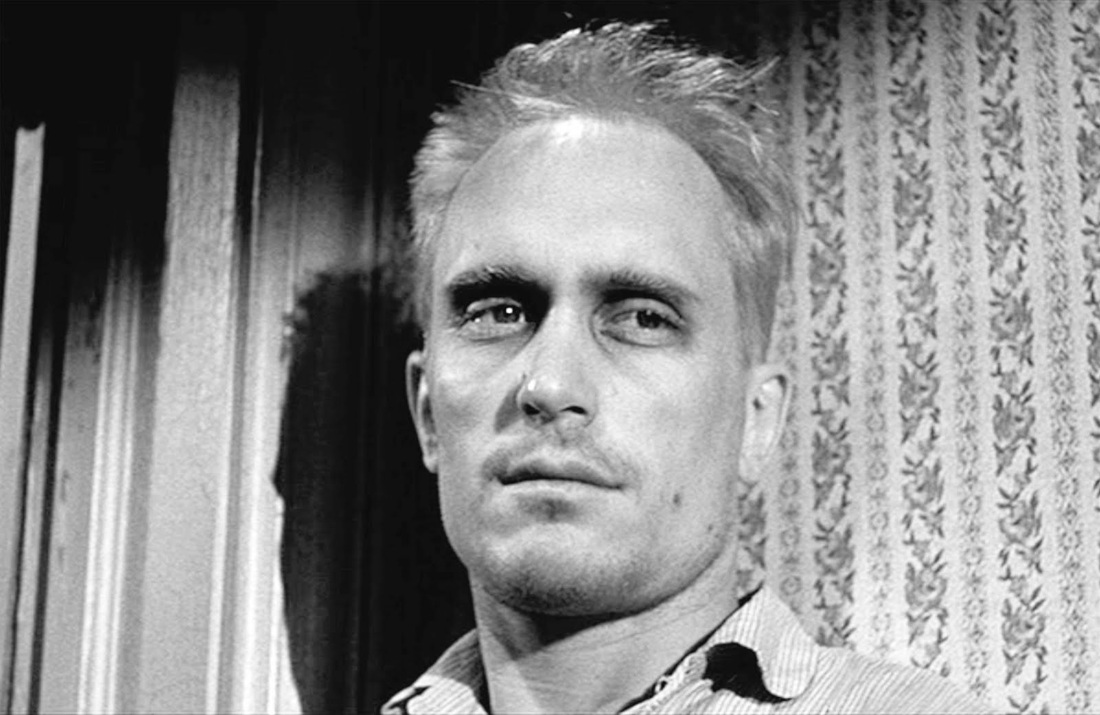
From our seminars, the item that interested me the most was the idea of empathy and how it connected to Secret Lives. Every time that an important moment occurs in the novel, we have an opportunity of feel the emotions of the characters. The scene that connects empathy and secret lives the best is Boo’s rescue of the children. We see how he truly feels and can no longer remain a bystander.
Related Readings
To supplement our reading of To Kill a Mockingbird we read three pieces, written by three different authors:
- On a Certain Blindness in Human Beings, William James. 1-2
- Black Men and Public Space, Brent Staples.
- Self-Segregation: Why It’s So Hard for Whites to Understand Ferguson, Robert P. Jones
Each of these connect to TKAM, in their own way but I will be discussing the writings of James and Jones. Each of these connect with the theme of Empathy.
Self Segregation is the piece that I feel connects the best to TKAM. In this article Jones discusses why whites and blacks cannot understand each other on race related issues. He cites social circles as the primary factor for this dissonance. In TKAM this dissonance is a very important part of the novel, the trial is an example of race playing a huge role in the life of the town. The Finch children are also able to view life through Calpurnia’s eyes, letting them see from the “other side.” Jem and Scout can then empathize with the black community, but Jem doesn’t really understand the reality of the situation until it comes to fruition.
On a Certain Blindness and Black Men and Public Space both relate to the novel and our current social climate. James shows how humans make decisions and judgments based in feelings. In TKAM the jury makes a decisions based on prejudice and fear, rather than fact. Brent Staples piece is more applicable to today even as it was written in the 80’s. To me its seems that our social climate hasn’t changed much at all. Every day there is a new race issue, but in reality it is the same issue. The one presented in TKAM, prejudice. Whites and Blacks don’t see eye to eye because they can’t empathize with one another. While they may have sympathy, they can’t feel each others pain.
The issues presented in TKAM and these related readings are still timely. Race is an issue that we, as Americans, must bypass in order for our nation to remain successful.
I hope that you’ve enjoyed my writing. Please leave any questions you may have.
 This lends Harper Lee a blank canvas on which she can introduce ideas through a sharp, but naive mind of a child. This forces the reader to examine topics from an unbiased view, potentially altering their current view. Think that in part this was what helped to make this an earthshaking novel. In the novel Atticus says this to Scout, “You never really understand a person until you consider things from his point of view . . . until you climb into his skin and walk around in it.” While this message is for Scout to learn and understand I think it is directed more towards to reader. One theme of To Kill a Mockingbird is — humans have an inability to understand the lives of others on face value. If you are following Atticus’ teaching, to learn about a person you must think about life from their point of view. However, this becomes difficult when people deliberately or unintentionally hide part of their lives, a secret life. In order for the readers to understand and empathize with the characters of the novel a child is a necessary narrator. The adults of TKAM are less protective of their hidden parts around children, namely Scout. This lets the reader experience different perspectives. I think that this is the most striking part of the novel thus far.
 A Moment on Pause